

Product Details:
Author(s):
Ntelamo, N
Year Published:
2025
Edition
1st Edition
Type:
Print | Soft Cover
Language:
English
About this publication
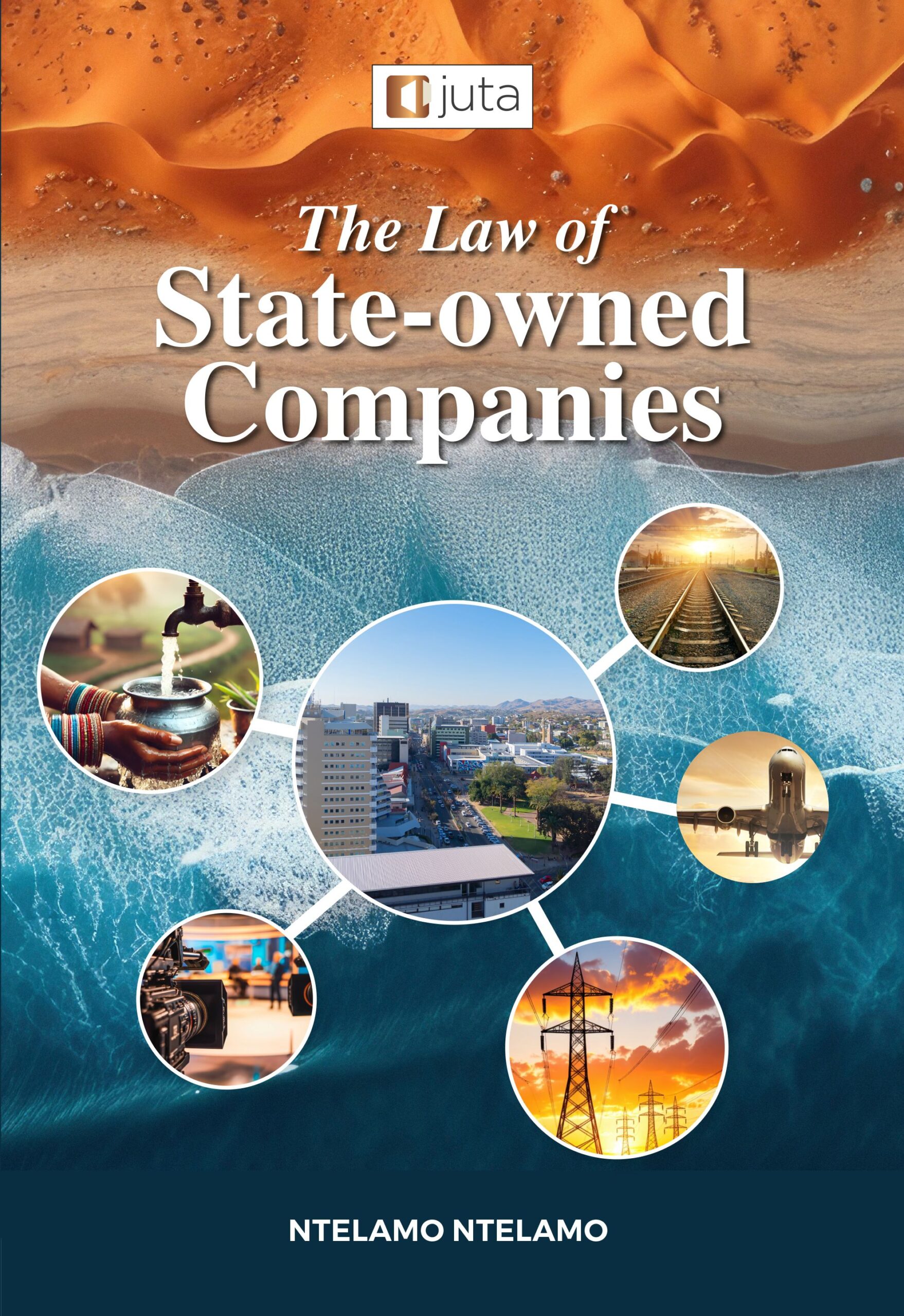
The Law of State-owned Companies is a pioneering work that addresses critical gaps in the legal understanding of public enterprises in Namibia, South Africa, and beyond. Focusing on the formation, governance, and operation of state-owned companies (SOCs), this book explores how these entities function as true companies—albeit ones symbolically owned by the state, and shaped by unique legal and political dynamics. While offering a limited treatment of public enterprises more broadly, it provides a focused and much-needed examination of the laws applicable to the governance of SOCs. At a time when SOCs are making headlines for governance failures and perceived ineffectiveness, this book sheds light on the root causes—ranging from weak oversight institutions to poor appointments at executive levels which often refl ects between the shareholder and the board of directors. It interrogates the factors behind corporate governance scandals and systematic capture, offering insight into why SOCs matter, how they fail, and what might be done to fix them. The Law of State-owned Companies is essential reading for:
• Academics and researchers in corporate governance
• Legal practitioners working with SOCs
• SOCs board members and management executives
• Trainers and evaluators of governance structures.
Content
CONTENTS
ABOUT THE AUTHOR
PREFACE
CHAPTER 1: INTRODUCTION AND THE ORIGIN OF STATE-OWNED COMPANIES
1.1 What is a public enterprise?
1.2 Why should public enterprises be defined?
1.3 Enforcement of accountability on public enterprises from a constitutional
perspective
CHAPTER 2: LEGAL PERSONALITY AND THE INCORPORATION STATE-OWNED COMPANIES
2.1 Introduction
2.2 Legal personality of SOCs
2.3 The Purpose of SOCs
CHAPTER 3: SOURCES OF LAW FOR STATE-OWNED COMPANIES
3.1 Introduction
3.2 The Constitution
3.3 Enabling legislation
3.4 The Companies Act 28 of 2004
3.5 The Public Enterprises Governance Act 1 of 2019
3.6 Common law
CHAPTER 4: CORPORATE GOVERNANCE IN STATE-OWNED COMPANIES
4.1 Introduction
4.2 How enabling laws apply
4.3 The objects of SOCs
4.4 The duties, powers and functions of SOCs
4.5 How the PEGA must be applied to SOCs
CHAPTER 5: THE CONSTITUTION AND STATE-OWNED COMPANIES
5.1 Introduction
5.2 The role of the Ombudsman in good governance of public enterprises
5.3 Social contributions of SOCs
5.4 A note on shareholder primacy
CHAPTER 6: THE AGENCY PROBLEM AND DISINTERESTED SHAREHOLDERS
6.1 Introduction
6.2 The agency problem defined
6.3 Lack of enforcing agents
CHAPTER 7: REGULATION OF STATE-OWNED COMPANIES
7.1 Introduction
7.2 Are enabling statutes comprehensive for SOCs?
7.3 Financial reporting
7.4 Overarching governance statutes
7.5 Corporate Governance codes
CHAPTER 8: STATE-OWNED COMPANIES GOVERNANCE AND SHAREHOLDERS
8.1 Introduction
8.2 SOC shareholder/s
8.3 The role, powers and functions of shareholders
of SOCs
8.4 How do ministers execute their role?
CHAPTER 9: STATE-OWNED COMPANIES GOVERNANCE AND THE BOARD OF DIRECTORS
9.1 Definition of director and board of directors
9.2 Are directors agents?
9.3 Appointment of board members
9.4 What codes of corporate governance say on the appointment of directors
9.5 Discretionary powers in appointing directors
9.6 Appointment and role of the chairperson of the board of directors
9.7 Board composition in SOCs: Distinction between executive and
non-executive directors
9.8 The myth of having a majority of non-executive directors on a board
9.9 Diversity and independence on SOC boards
CHAPTER 10: DIRECTORS’ DUTIES
10.1 What is the role of the board of directors in SOCs?
10.2 Ensuring the success of the SOC
10.3 Fiduciary duties10.4 Care, skill and diligence
10.5 The business judgment rule
10.6 Board directors’ orientation
CHAPTER 11: REMOVAL OF DIRECTORS FROM OFFICE
11.1 Introduction
11.2 Resignation of directors
11.3 Dismissal and removal of directors from a board of directors
11.4 Distinction between removal, vacation and disqualification
11.5 Disqualification of directors from appointment or from office
11.6 Liability of directors in SOCs
11.7 Chief executive officer
11.8 The company secretary
11.9 The role of a company secretary
CHAPTER 12: OWNERSHIP AND CONTROL OF STATE-OWNED COMPANIES
12.1 Shareholding in SOCs
12.2 PEGA’s provisions on SOC ownership
12.3 Namibia’s ownership policy
CHAPTER 13: ASSURANCE, COMPLIANCE AND FINANCIAL REPORTING
13.1 Accounting records and financial statements
13.2 Auditor and auditing of SOC financial statements
13.3 Appointment of the auditor
13.4 Effect of the Public Procurement Act on the appointment of an auditor for SOCs
13.5 Introduction to the auditor’s duty
13.6 Statutory and common law duties of the auditor
13.7 Auditor liability
13.8 Why SOC financial statements must be audited
13.9 Annual general meeting and other meetings for shareholders
CHAPTER 14: TICK-BOX GOVERNANCE AND PERFORMANCE AGREEMENTS
14.1 Introduction
14.2 The essence of a governance agreement and an individual performance
agreement
14.3 Liability for directors and shareholder representatives
CHAPTER 15: BOARD PERFORMANCE AND EVALUATION
15.1 Introduction
15.2 Context of board performance evaluation
15.3 How should the performance of boards of directors be evaluated?
15.4 Concluding remarks
CHAPTER 16: STRATEGY
16.1 Chief executive officer’s role in strategy
16.2 Formulation of a strategy
16.3 Defining the business and objective of the SOC
16.4 Identifying required competencies and value-generating activities
16.5 Finalising the strategy by ensuring it is detailed and companywide
16.6 Approval of a strategy
16.7 Execution, monitoring and evaluation of strategy
16.8 Leadership to drive strategy
16.9 Cost of financing a strategy
16.10 Common costs in implementing a strategy
CHAPTER 17: CADRE DEPLOYMENT TO STATE-OWNED COMPANIES – WHAT EXACTLY THIS ENTAILS
17.1 Constitutionality of cadre deployment
17.2 Justification for cadre deployment versus performance
CHAPTER 18: STATE HOLDING COMPANY
18.1 Defining a holding company
18.2 How does a holding company work?
18.3 What a state holding company may look like and its implications
18.4 The organs of corporate governance under the holding company
18.5 The governance organs in the holding company under the National State
Enterprises Bill
18.6 Governance and ownership
18.7 Impact on labour
18.8 A partial case study of the Singapore model – Temasek Plc
CHAPTER 19: PERCEPTIONS OF INTERFERENCE IN STATE-OWNED COMPANIES
19.1 Interference by one or another organ charged with governance
19.2 Conclusion
CHAPTER 20: LIABILITY IN ACCOUNTABILITY FOR STATE-OWNED COMPANIES GOVERNANCE
20.1 Executive labour relations in SOCs
20.2 Reporting lines for executive management in SOCs
20.3 Who can discipline who?
20.4 Notice to state a case and procedural fairness
CHAPTER 21: EXECUTIVE PAY AND PERFORMANCE OF STATE-OWNED COMPANIES
21.1 Introduction
21.2 What should the remuneration be for executives in SOCs and other public
enterprises?
CHAPTER 22: RECKLESS TRADING IN STATE-OWNED COMPANIES
22.1 Introduction
CHAPTER 23: RESTRUCTURING, JUDICIAL MANAGEMENT AND BUSINESS RESCUE OF STATE-OWNED COMPANIES
23.1 Introduction
23.2 Restructuring
23.3 Judicial management
23.4 Business rescue
CHAPTER 24: CORPORATE FINANCE AND PROFITABILITY OF STATE-OWNED COMPANIES
24.1 Introduction
24.2 Shares and SOC financing
24.3 Dividends
CHAPTER 25: SUCCESSION PLANNING
25.1 Introduction
25.2 What the succession plan of an SOC should include
25.3 Who should ensure there is a succession plan?
CHAPTER 26: STATE-OWNED COMPANIES AND ADMINISTRATIVE LAW
26.1 Introduction
26.2 Arbitrariness
26.3 Administrative law and corporate governance of SOCs
26.4 Administrative decision and executive decision
26.5 Rationality
Interest / Benefit to
Be the first to review “The Law of State-owned Companies”
Related products





Reviews
There are no reviews yet.